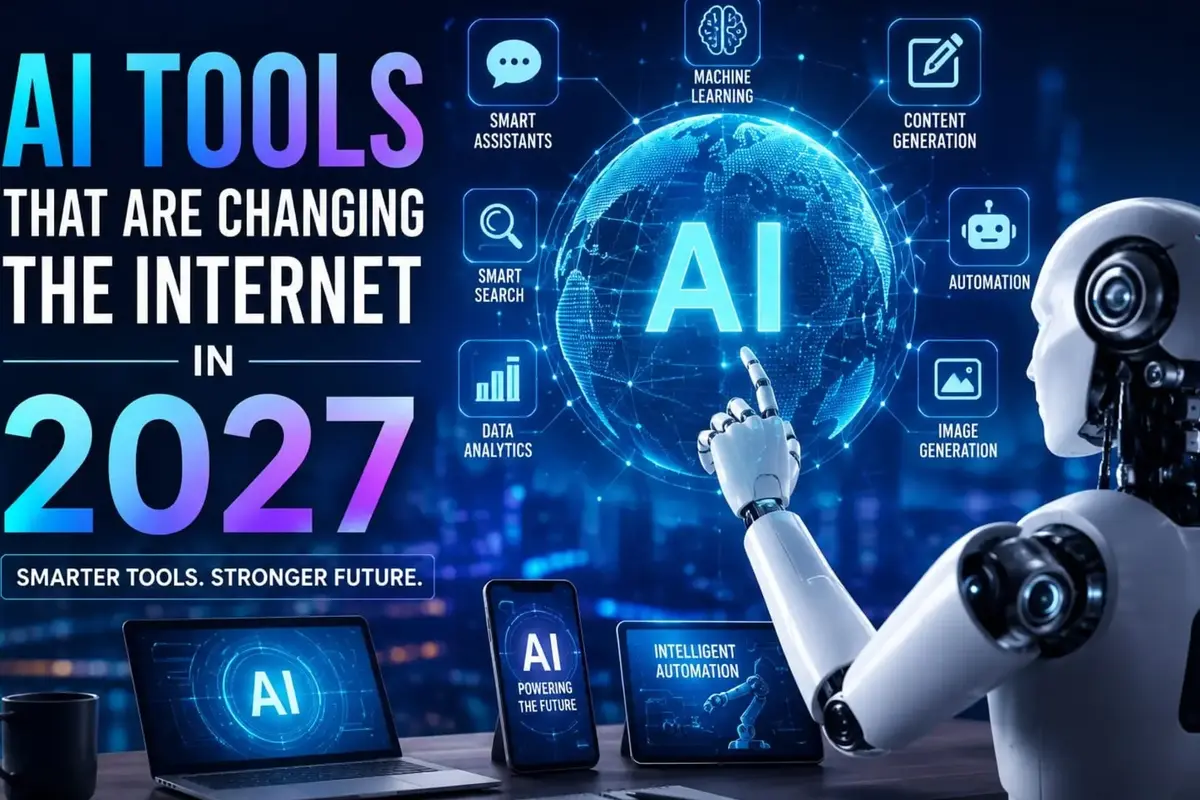
AI Tools are Changing Internet in 2027
Think about how you used the internet ten years ago. You searched Google, opened websites, watched videos, sent emails, and posted on social media. Most of the work was done manually. Now imagine an internet where you can simply tell a computer what you want, and it can help you research a topic, write a document, create an image, analyze information, organize your schedule, or even help build software.
That’s the direction we’re heading toward.
Artificial intelligence is no longer something found only in research laboratories. It has become part of search engines, smartphones, websites, business software, social media platforms, and everyday applications.
By 2027, this transformation could become even more noticeable. The biggest change isn’t simply that computers are becoming smarter. It’s that people can increasingly interact with technology using normal human language.
So, how AI tools are changing the internet in 2027 is a question worth understanding for anyone who works, studies, creates content, or runs a business online.
How AI Is Changing the Internet
Artificial intelligence is changing the internet in several major ways.
Instead of simply displaying information, websites and applications are increasingly able to understand users and respond to their needs.
Here are some of the biggest changes:
- Smarter search experiences
- Faster content creation
- Automated image and video generation
- Intelligent customer support
- Faster data analysis
- Automated business processes
- Personalized shopping recommendations
- Coding assistance
- Smarter smartphone applications
- More personalized advertising
For example, an online store can analyze what a visitor has viewed and recommend products that are more relevant to that person.
Similarly, a search system can understand a complete question instead of simply matching individual words.
This means the internet is gradually moving from keyword-based interactions toward intent-based experiences.
Generative AI: From Ideas to Finished Content
One of the biggest developments in technology is generative artificial intelligence. Unlike traditional software, generative systems can create new material based on instructions.
They can produce:
- Blog drafts
- Images
- Videos
- Presentations
- Computer code
- Audio
- Product descriptions
- Social media ideas
- Summaries
- Marketing concepts
For beginners, a beginner’s guide to generative AI starts with understanding how these systems respond to prompts or instructions.
For example, instead of manually creating ten social media ideas, a marketer could describe their audience and campaign goals and receive a list of possible concepts.
However, there’s an important rule:
Don’t Publish Everything Automatically
Generated content should be:
- Fact-checked.
- Edited by a human.
- Improved with original insights.
- Checked for accuracy and relevance.
- Written for the actual audience.
Artificial intelligence can accelerate the process, but human creativity and judgment still matter.
Best Generative AI Platforms in 2027
The generative technology market is becoming extremely competitive.
By 2027, users may have access to specialized platforms for almost every digital task.
Some platforms may focus on:
- Writing and research
- Graphic design
- Video production
- Music and audio
- Software development
- Business analytics
- Education
- Marketing
The best generative AI platforms in 2027 won’t necessarily be the ones with the most features.
Instead, users will likely care about:
Accuracy + Speed + Ease of use + Privacy + Integration
For businesses, integration will be especially important. Imagine a system that can connect with your customer database, email platform, analytics dashboard, and project-management software.
That could turn several hours of manual work into a much faster automated workflow.
Search Engines Are Becoming More Intelligent
Remember when searching online meant typing a few keywords and scrolling through ten blue links?
Search is changing.
People increasingly want direct answers instead of simply a list of websites.
For example:
Traditional search: “best laptops for students”
Conversational search: I am a university student with a limited budget. Which laptop should I choose for studying, video calls, and basic editing?
The second question contains more context.
Intelligent search systems can potentially understand context and provide a more useful response.
What Does This Mean For SEO?
Website owners need to focus on:
- Helpful content
- Search intent
- Original information
- Clear structure
- Strong topical relevance
- Good user experience
- Technical performance
- Trustworthy information
Top Software Powered by Artificial Intelligence
Artificial intelligence is becoming a feature inside software that people already use. You don’t always need to visit a separate AI website anymore. Many modern applications can include intelligent features directly within their existing interfaces.
For example:
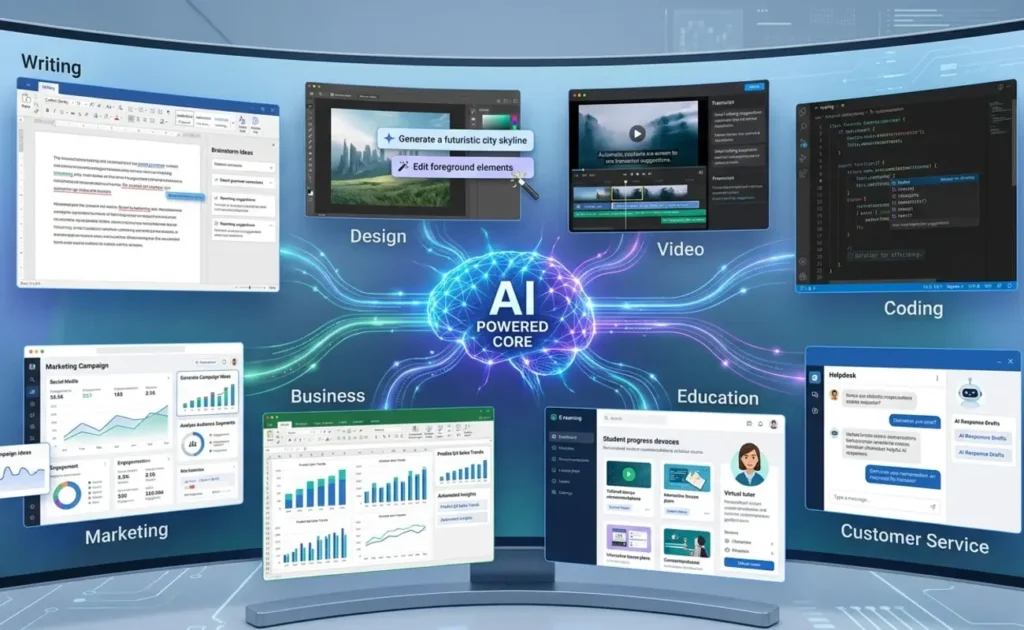
The top software powered by artificial intelligence will increasingly focus on making complicated tasks easier for ordinary users.
That’s an important shift. You don’t necessarily need to become an AI expert. You simply need to know how to use intelligent features effectively.
How Businesses Use Intelligent Automation
Businesses handle thousands of repetitive tasks every day. From answering customer questions to organizing information, many routine activities can consume valuable time that employees could otherwise spend on more important work.
For example, businesses often need to:
- Respond to common customer questions
- Organize and manage large amounts of information
- Analyze reports and business data
- Schedule meetings and appointments
- Process documents and forms
- Manage routine emails and follow-ups
This is where intelligent automation can make a real difference. Instead of requiring employees to complete every repetitive task manually, automated systems can handle routine workflows quickly and consistently.
How AI Is Transforming Online Businesses
Running an online business requires managing many different activities. You need to attract visitors, understand customers, create content, answer questions, analyze performance, and improve your products. Artificial intelligence can assist with many of these areas.
Understanding how AI is transforming online businesses becomes easier when we look at the customer journey.
1. Before a customer buys:
Intelligent systems can help with:
- Audience research
- Product recommendations
- Content ideas
- Advertising analysis
2. During the purchase:
They can assist with:
- Chat support
- Personalized recommendations
- Product comparisons
- Frequently asked questions
3. After the purchase:
They can help with:
- Customer support
- Feedback analysis
- Follow-up communication
- Product recommendations
This creates a more personalized experience without requiring a huge team.
Latest Artificial Intelligence Trends to Watch
Technology changes quickly, so what seems impressive today may become normal tomorrow.
Some of the latest artificial intelligence trends include:
1. AI Agents
Instead of simply answering questions, advanced systems can potentially perform a sequence of tasks.
2. AI-Powered Search
Search is becoming more conversational and focused on understanding user intent.
3. Generative Video
Creating video from written descriptions is becoming increasingly accessible.
4. Multimodal Systems
Modern systems can work with combinations of text, images, audio, and video.
5. Intelligent Automation
More businesses are automating repetitive workflows.
6. On-Device Intelligence
Some intelligent features can increasingly run directly on smartphones and computers.
7. Greater Focus on Privacy
As adoption grows, privacy and responsible data use will become even more important.
Artificial Intelligence and Digital Marketing
Digital marketing is another field experiencing major changes.
Marketers can use intelligent software to assist with:
- Keyword research
- Audience analysis
- Content planning
- Campaign analysis
- Customer segmentation
- Social media planning
- Performance reporting
But technology doesn’t automatically create a successful marketing strategy.
A marketer still needs to understand:
- Who is the audience?
- What problem are they trying to solve?
- Why should they trust this brand?
- What makes the content different?
This is why the best approach is usually human strategy + intelligent assistance.
Artificial Intelligence and Affiliate Marketing
Affiliate marketing is another online field that can benefit from intelligent technology.
Website owners can use software to help with:
- Topic research
- Content planning
- Competitor analysis
- Audience research
- Performance tracking
- Workflow automation
However, successful affiliate marketing still depends on trust. Simply generating hundreds of articles isn’t enough. A strong affiliate website should provide:
- Genuine recommendations
- Useful comparisons
- Original insights
- Accurate information
- Helpful explanations
- A good user experience
Why Technical SEO Still Matters
As websites become more advanced, technical performance becomes even more important. A website can have amazing content, but if it loads slowly or has serious technical problems, visitors may leave.
Important areas include:
- Page speed
- Mobile usability
- Website security
- Indexing
- Crawlability
- Structured data
- Internal linking
- Core Web Vitals
Artificial intelligence may make websites smarter, but technical SEO helps search engines and users access those websites efficiently.
Future Technology Trends in 2027
The future technology trends in 2027 will likely involve deeper integration between people and intelligent software. We may see more technology that can:
- Understand context
- Remember preferences
- Complete multiple tasks
- Work across different applications
- Personalize digital experiences
- Analyze different types of information
- Automate complex workflows
The most interesting part is that many of these features may become so normal that people stop thinking about them as “AI.” Just like people don’t think twice about using GPS today, intelligent assistants and automated software could become ordinary parts of everyday digital life.
What Should You Do to Prepare for 2027?
You don’t need to become a computer scientist to benefit from these developments. Start with a few simple steps:
1. Learn the Basics
Understand concepts such as generative AI, machine learning, automation, and AI agents.
2. Experiment
Try different applications and discover what actually saves you time.
3. Improve Your Skills
Learn skills that technology doesn’t easily replace, such as critical thinking, communication, creativity, and strategy.
4. Protect Your Data
Don’t share sensitive information with unknown platforms.
5. Verify Information
Never assume that automatically generated information is always correct.
6. Focus on Real Problems
Don’t use technology just because it is trendy. Use it when it solves a genuine problem.
Conclusion
The internet of 2027 is likely to be significantly more intelligent, personalized, and automated than the internet people know today. From generative systems and digital assistants to smart search, automation, online business, and everyday applications, artificial intelligence is becoming deeply connected with the digital world.
Understanding how artificial intelligence is changing the internet can help individuals and businesses prepare for these changes instead of simply reacting to them. The most successful approach will not necessarily be replacing humans with machines. Instead, it will be about combining human creativity, judgment, and experience with increasingly capable technology.
As we move toward 2027 and beyond, artificial intelligence will continue to influence how people search, communicate, create, work, shop, and build businesses online. The real opportunity is learning how to use these technologies responsibly and effectively.
Frequently Asked Questions (FAQs)
1. What will be the biggest AI trend in 2027?
AI agents, intelligent automation, multimodal systems, personalized experiences, AI-powered search, and greater integration into everyday software are likely to remain major areas of development.
2. Will AI replace online businesses?
No. Instead, it is more likely to change how online businesses operate. Companies can use automation to reduce repetitive work while humans continue handling strategy, creativity, relationships, and important decisions.
3. Can beginners use generative AI?
Yes. Many modern platforms are designed for non-technical users. Beginners can start with simple tasks such as brainstorming, summarizing, drafting, and organizing information.
4. Why should businesses learn about AI?
Understanding these technologies can help businesses improve productivity, automate repetitive processes, understand customers, and provide better digital experiences.
5. Is artificial intelligence always accurate?
No. Intelligent systems can produce incorrect or misleading information. Important information should always be reviewed and verified by a human.