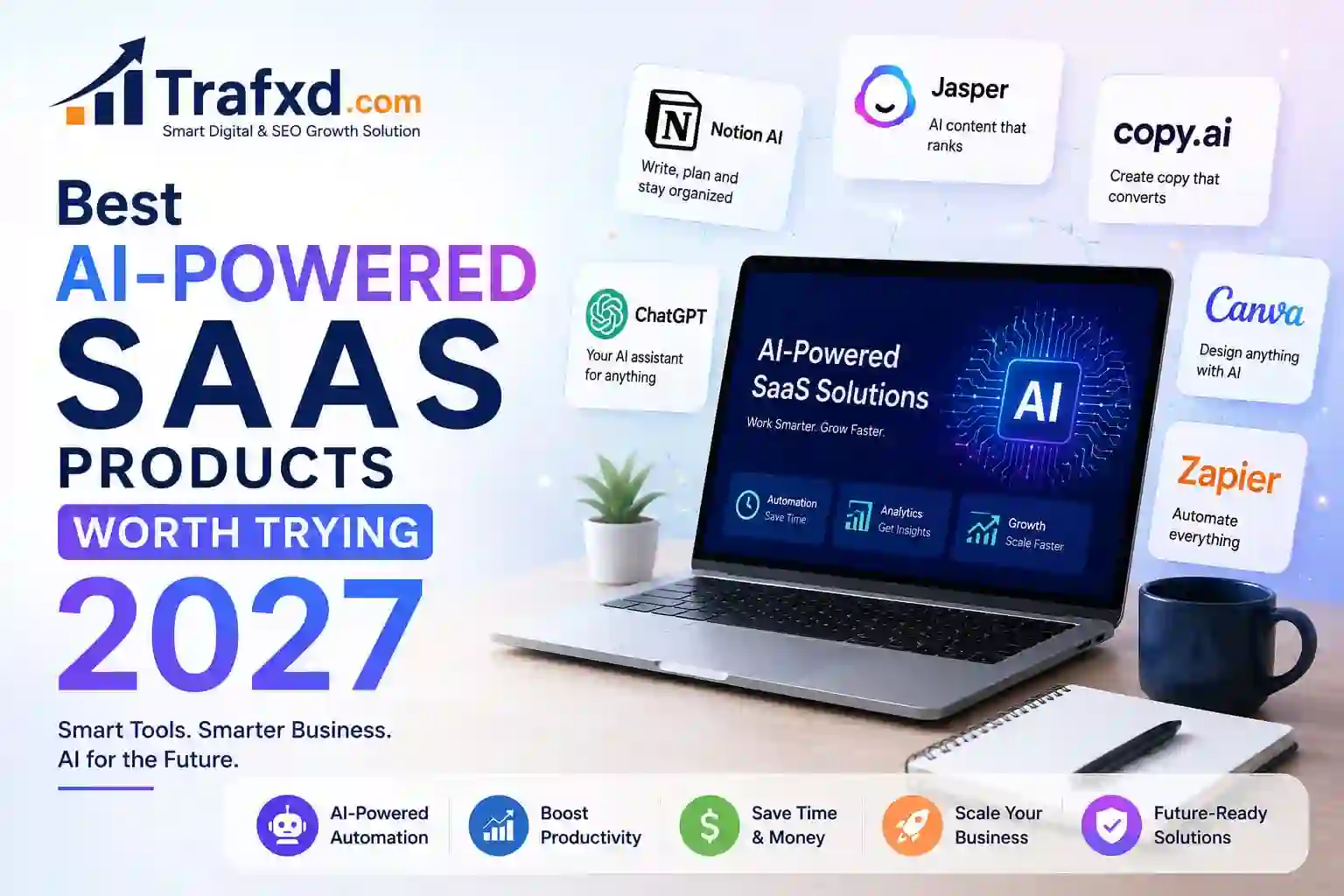
Best AI-Powered SaaS Products Worth Trying In 2027
Imagine opening your laptop in the morning and finding that your software has already organized your tasks, summarized yesterday’s meeting, prepared a few email ideas, and highlighted the work that needs your attention first.
That might have sounded futuristic a few years ago. Today, AI is already becoming part of everyday software. From AI tools and design platforms to smart automation and productivity tools, these technologies are helping people get more done with less effort.
That is why the best AI-powered SaaS products are becoming increasingly interesting for businesses, freelancers, startups, and creators.
Let’s explore the major types of AI-powered SaaS products to watch in 2027 and why they’re useful.
Why AI-Powered SaaS Is Becoming a Big Deal
Traditional SaaS has already changed the software industry. Instead of buying a program once and installing it on your computer, you can access software online and usually pay through a subscription.
AI adds another layer to this model.
A normal project management platform might help you create tasks and deadlines. An AI-powered platform can summarize a project, identify priorities, and suggest what your team should focus on next.
An ordinary email platform lets you send campaigns. An AI-powered one can help create subject lines, analyze performance, and suggest content.
The difference is simple:
Software isn’t just storing and displaying information anymore. It’s starting to help users work with that information.
That shift is one reason the best AI-powered SaaS products are attracting attention across almost every industry.
What Makes the Best AI-Powered SaaS Products Stand Out?
Not every SaaS product with an AI button deserves your attention. Some tools add AI simply because it is currently popular. Others use it to solve a genuine problem.
When evaluating an AI-powered SaaS platform, look beyond the marketing claims.
Ask yourself:
- Does it solve a problem you actually have?
- Can it save you time?
- Is the AI feature useful in everyday work?
- Does it connect with the tools you already use?
- Is the pricing reasonable?
- Is your data handled responsibly?
- Can you learn the platform without spending days watching tutorials?
A useful AI tool should simplify your workflow, not create another complicated system to manage.
AI-Powered SaaS Automation Tools That Take Work Off Your Plate
Repetitive tasks can quietly consume hours every week.
Copying customer information, moving data between apps, sending notifications, creating follow-up tasks, and updating records may not seem difficult on their own. However, when combined, they can become a serious drain on time.
That’s where AI-powered SaaS automation tools come in.
These platforms can connect different applications and automate workflows. AI can make those workflows more flexible by helping the system interpret information and decide what action should happen next.
For example:
New customer form → CRM update → Personalized email → Sales notification
Once configured, the process can happen automatically.
For small businesses with limited staff, this can be particularly valuable. Instead of hiring someone to handle every repetitive administrative task, a business can automate parts of the workflow, allowing employees to focus on customers and strategy.
AI Project Management Software for Small Businesses
Running a project can quickly become messy.
There are deadlines to remember, tasks to assign, meetings to summarize, and team members to coordinate. Traditional project management software already helps organize these responsibilities, but AI is making these platforms more proactive.
When comparing the best project management software, look for features beyond simple task lists.
AI-powered platforms can potentially help teams:
- Summarize project updates
- Identify overdue tasks
- Prioritize important work
- Create task suggestions
- Summarize meetings
- Track project progress
- Highlight potential delays
Imagine having a project with 50 tasks. Instead of manually checking every item, an AI assistant could quickly tell you which tasks require attention today.
That’s the kind of practical improvement that makes AI useful.
Cloud Technology Trends Shaping SaaS in 2027
SaaS depends heavily on cloud computing, and cloud technology continues to evolve. One of the most important cloud technology trends shaping SaaS in 2027 is deeper AI integration.
Instead of treating AI as a separate application, businesses are increasingly seeing it built directly into the software they already use.
Security will also remain important. As businesses store more information online and give AI systems access to business data, protecting that information becomes increasingly important.
Another trend is interoperability. Businesses don’t want isolated tools anymore. They want platforms that communicate with each other.
This means the future of SaaS isn’t only about individual applications. It’s also about how those applications fit into a larger digital ecosystem.
AI-Powered Online Accounting Software for Small Businesses
Accounting is another area where automation can make a real difference.
An AI-powered online accounting software solution for small businesses can help with transaction categorization, financial reports, expense tracking, and other routine activities.
For a small business owner, reducing administrative work can be a major advantage.
Instead of spending hours organizing financial information, you can use an AI-assisted platform to handle some routine tasks automatically.
However, there’s an important rule here: AI should assist with financial work, not encourage you to stop checking it.
Financial information can have serious consequences when it is wrong. Businesses should review important figures and use professional advice when necessary.
The best tools are those that save time while keeping the user in control.
AI Email Marketing Tools for Small Businesses
Email marketing may look simple from the outside. Write an email. Add some contacts. Click send.
In reality, effective campaigns require research, segmentation, testing, writing, timing, and analysis.
Modern AI email marketing tools for small businesses can help with several of these tasks.
For example, AI may suggest:
- Subject lines
- Email copy
- Audience segments
- Campaign ideas
- Send-time recommendations
- Content variations
This doesn’t mean marketers should publish whatever AI generates.
The strongest approach is to use AI for the first draft and then add human judgment, brand personality, and real customer knowledge.
A machine can suggest ten subject lines. A human still needs to decide which one sounds right for the audience.
AI SaaS Products for Content Creators and Marketers

Content creation has become one of the biggest areas for AI experimentation.
There are now AI SaaS products for content creators and marketers covering everything from writing and research to design, video, SEO, and social media.
For a content creator, AI can help overcome one of the biggest problems: the blank page.
Instead of starting with nothing, a creator can ask for ideas, outlines, headlines, or alternative approaches.
But there’s a catch.
If everyone uses the same tools and publishes whatever they generate, content quickly becomes repetitive.
That’s why human experience matters.
A creator can use AI to brainstorm ten ideas but bring personal stories, opinions, examples, and expertise to the final piece. That’s where technology becomes a creative assistant rather than a replacement for creativity.
AI-Powered Online Software Solutions for Startups
Startups usually have to accomplish a lot with limited resources.
They need marketing, customer support, accounting, project management, communication, and analytics—but they may not have large teams for every department.
That’s where AI-powered online software solutions for startups can help.
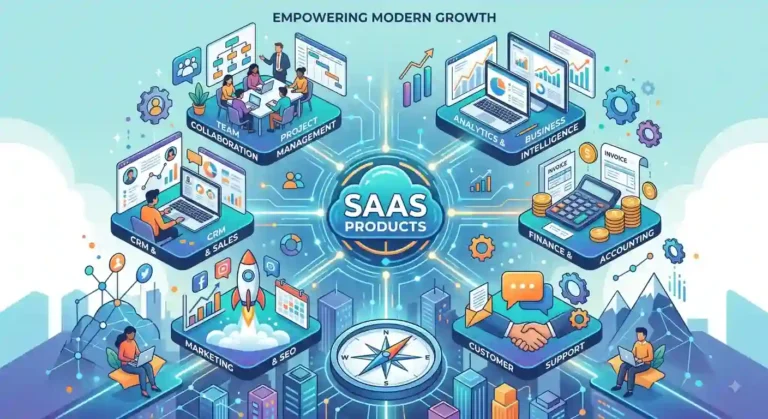
A startup can use SaaS platforms for:
- Customer relationship management
- Marketing automation
- Accounting
- Project management
- Customer support
- Team collaboration
- Content creation
- Data analysis
Instead of building every system from scratch, startups can subscribe to existing platforms and concentrate on their main product or service.
This can also make scaling easier. A company can start with a basic plan and expand as its customer base grows.
What Will Make AI SaaS More Interesting in 2027?
The biggest change may be the move from AI assistants to AI agents. An assistant might answer your question or create a draft.
An agent could potentially take a goal and complete several connected steps.
For example, instead of asking an AI to write a marketing email, a future SaaS platform might help identify a target audience, create a campaign, schedule it, analyze the results, and suggest improvements.
That doesn’t mean humans disappear from the process.
Instead, people may spend more time reviewing decisions, setting goals, handling complex situations, and adding creativity.
This could make software feel less like a collection of buttons and more like a digital teammate.
Are AI-Powered SaaS Products Worth Trying in 2027?
For many businesses and professionals, the answer will likely be yes—but with a little caution.
AI can save time, automate repetitive tasks, improve workflows, and help people work with large amounts of information.
But technology alone doesn’t create results.
A good AI tool paired with a poor workflow won’t magically fix a business.
Start with a real problem. Find a tool that addresses it. Test the results. Keep it if it creates value.
That’s a much smarter approach than subscribing to every new AI product that appears online.
Conclusion
The best AI-powered SaaS products aren’t necessarily the ones with the longest feature lists or the most impressive advertisements.
They’re the products that quietly make work easier.
A good automation platform can remove repetitive tasks. An AI project management tool can help teams stay organized. An accounting platform can reduce administrative work. Email marketing software can speed up campaign creation, while creator-focused tools can help turn ideas into finished content.
The real opportunity in 2027 will be connecting these capabilities.
Instead, choose software that solves genuine problems, connects with your workflow, and gives you more time to focus on work that actually matters.
That’s what makes an AI-powered SaaS product worth trying.
Frequently Asked Questions (FAQs)
1. What are AI-powered SaaS products?
AI-powered SaaS products are cloud-based software services that use artificial intelligence to automate tasks, analyze information, generate content, make recommendations, or assist users with their workflows.
2. What are the best AI-powered SaaS products for small businesses?
The right choice depends on the business’s needs. Useful categories include AI automation tools, project management software, accounting platforms, email marketing tools, customer support software, and productivity applications.
3. Are AI SaaS tools useful for startups?
Yes. Startups can use AI SaaS tools to automate repetitive work, manage projects, support customers, analyze data, and handle marketing without building every software system internally.
4. How can AI improve SaaS software?
AI can help SaaS platforms automate routine tasks, analyze data, generate content, summarize information, recognize patterns, and provide personalized recommendations.
5. Are AI-powered SaaS products expensive?
Pricing varies widely. Many platforms offer free or low-cost plans, while advanced business and enterprise solutions can cost considerably more. Businesses should compare the features they actually need before subscribing.
6. What should I look for when choosing an AI SaaS product?
Focus on the problem it solves, AI capabilities, integrations, pricing, security, ease of use, customer support, and whether it genuinely improves your workflow.