Web3 vs. Web2: What’s The Difference And Why Does It Matter
The internet has changed dramatically over the last few decades. We started with simple websites that mainly allowed people to read information. Then, social media, online shopping, streaming platforms, and cloud services transformed the internet into an interactive space. Today, another major change is underway in Web3.
Web3 uses technologies such as blockchain, cryptocurrencies, smart contracts, and decentralized applications. However, Web3 does not simply replace Web2. Instead, it introduces a different approach to how people use online services and interact with digital platforms.
In this guide, we will explore the major differences between Web3 and Web2, their benefits and limitations, and why this change could matter for the future of the internet.
What Is Web2 And How Does It Work?
Web2 refers to the modern version of the internet that most people use every day. It allows users to create, share, and interact with content rather than simply read information.
Social media platforms, video-sharing websites, online marketplaces, search engines, and cloud applications all represent the Web2 model.
For example, users can create an account on a social media platform, upload photos, publish videos, send messages, and interact with other users. The platform provides the infrastructure that enables these activities.
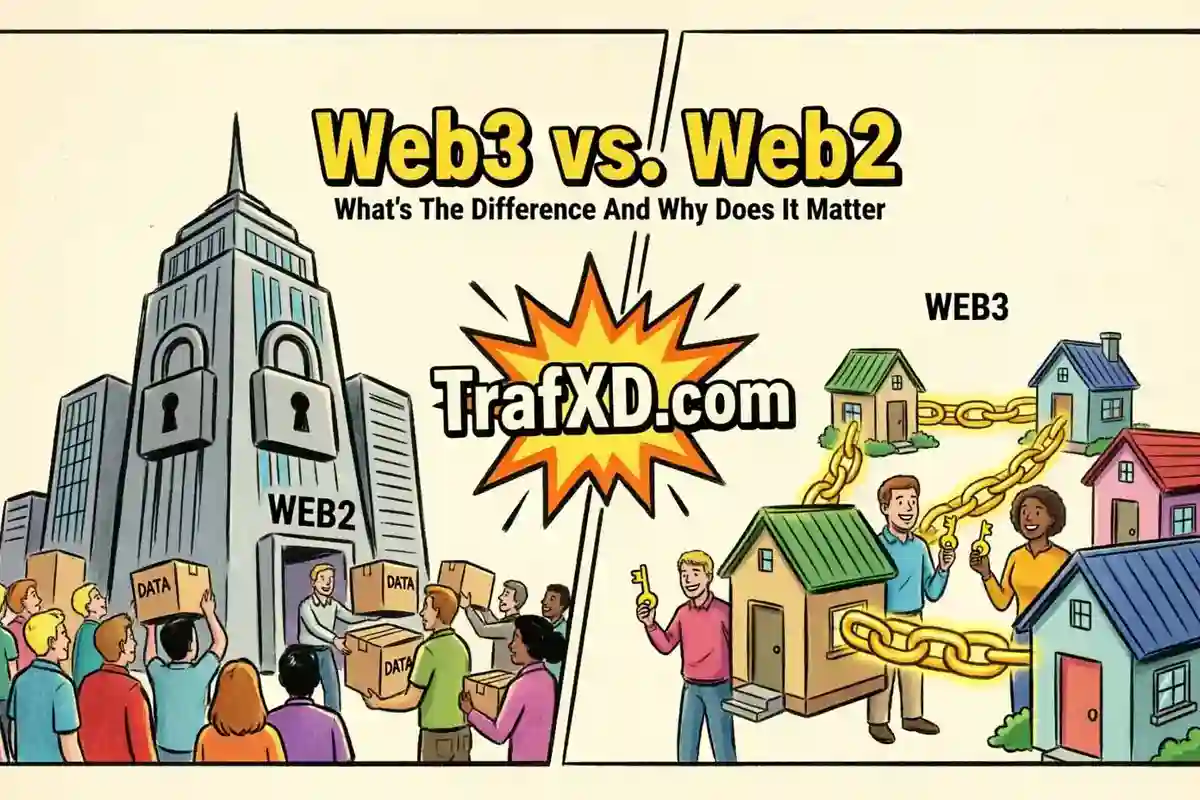
However, large companies usually control Web2 platforms. They manage servers, user accounts, data, algorithms, and many aspects of the user experience.
This centralized structure makes Web2 convenient and easy to use. At the same time, it creates concerns about data privacy, platform control, advertising, and ownership.
What Is Web3 And How Is It Changing The Internet?
Web3 represents a vision for a more decentralized internet. Instead of depending entirely on centralized companies, Web3 uses blockchain networks and decentralized technologies to distribute control.
Blockchain provides a shared digital ledger that can record transactions and other information across a network. Smart contracts can also execute programmed actions automatically when specific conditions are met.
Web3 applications, often called decentralized applications (dApps), can connect directly to blockchain networks. Users may interact with these applications through crypto wallets instead of traditional username-and-password accounts.
For example, a Web3 game may allow players to own certain digital assets. Instead of keeping those assets only inside the game’s private database, blockchain technology can record ownership on a public network.
So, what is the difference between Web3 and Web2 from a basic perspective? Web2 generally gives platforms control over infrastructure and user data, while Web3 aims to give users more control through decentralized networks.
What Is The Difference Between Web3 And Web2
The easiest way to understand the difference between them is to compare their main characteristics.
1. Centralization vs. Decentralization
Web2 relies heavily on centralized platforms. A company usually controls the servers, databases, policies, and user accounts.
For example, when you create an account on a social media website, the company stores and manages your account information.
Web3 takes a different approach. Blockchain networks distribute information across multiple computers rather than relying on a single central authority.
Key point: Web3 aims to reduce dependence on a single central authority.
However, this does not mean every Web3 service is completely decentralized. Many projects still use centralized components.
2. Data Ownership and Privacy
Data plays a major role in the Web2 business model. Many free platforms collect information about their users and use it to personalize services and advertising.
Users often accept lengthy terms and conditions without fully understanding how companies use their data.
Web3 aims to give users greater control over their digital identity and assets. Instead of depending completely on a platform account, users can connect a digital wallet to certain Web3 applications.
Web3 can offer:
- Greater control over digital identity
- More control over certain digital assets
- Less dependence on traditional platform accounts
However, users also become responsible for protecting their wallets and private keys.
Therefore, what is the difference between Web3 and Web2 when it comes to data? Web2 usually places data management in the hands of platforms, while Web3 attempts to give individuals greater control.
3. Digital Ownership
Digital ownership represents another important difference.
In Web2, you may purchase a digital item or create content on a platform, but the platform often controls the underlying system. If the company changes its rules or shuts down a service, your access may change.
Web3 can use blockchain technology to record ownership of digital assets. Non-fungible tokens (NFTs) are one example of this model.
An NFT can represent ownership or access related to a digital item. However, owning an NFT does not automatically mean you own the copyright or all rights associated with the underlying content.
For example, an NFT may prove ownership of a particular digital token, but it does not automatically give you copyright over the artwork connected to it.
Web3 therefore introduces new possibilities for digital ownership, but users still need to understand the legal and technical details.
4. Business Models
Web2 companies often make money through advertising, subscriptions, commissions, and data-driven services.
Web3 can introduce different business models. Cryptocurrency tokens, decentralized finance applications, NFTs, and blockchain-based services can create new ways for projects to generate value.
Some Web3 communities also use token-based systems to encourage participation.
Common Web3-based models include:
- Cryptocurrency and token-based services
- Decentralized finance (DeFi)
- NFTs and digital collectibles
- Blockchain-based applications
However, Web3 business models can involve significant risks. Token prices may change quickly, projects can fail, and users can lose money.
5. Login and Digital Identity
Web2 usually requires users to create accounts with usernames, email addresses, and passwords.
Web3 applications can allow users to connect a crypto wallet instead. The wallet can act as a digital identity for interacting with certain blockchain applications.
This approach can reduce the number of separate accounts a user needs.
The main difference is:
- Web2: Username, email, and password
- Web3: A crypto wallet can act as an identity
However, losing access to a wallet can create serious problems because users may not have a traditional company support team that can reset their credentials.
6. Blockchain Technology
Blockchain plays a central role in many Web3 applications.
Web2 does not require blockchain technology. Most traditional websites and applications rely on centralized databases and conventional cloud infrastructure.
Web3 projects can use blockchains to:
- Record transactions
- Manage digital assets
- Execute smart contracts
- Support decentralized applications
This makes blockchain one of the most important technologies behind the Web3 ecosystem.
Web2 primarily relies on centralized databases, whereas many Web3 applications use blockchain networks to create decentralized systems.
Benefits Of Web3
Web3 offers several potential benefits.
1. Greater User Control
Users can have more control over certain digital assets and online identities. Blockchain technology can allow people to interact with applications without relying entirely on a central platform.
2. Digital Ownership
Blockchain can create transparent records of ownership for certain digital assets. This can support new applications in gaming, collectibles, entertainment, and other industries.
3. New Financial Opportunities
Decentralized finance, often called DeFi, allows users to access certain financial services through blockchain-based applications.
Users can explore services such as decentralized exchanges, lending platforms, and other financial applications. However, these services can involve substantial risks.
4. Global Accessibility
Many blockchain networks operate globally and allow people to interact with applications using an internet connection and a compatible wallet.
This can create new opportunities for people who have limited access to traditional financial services.
5. Limitations of Web3
Web3 also has several challenges.
First, blockchain networks can face scalability problems. Some networks struggle to process large numbers of transactions quickly and cheaply.
Second, Web3 applications can have complicated user experiences. Setting up a crypto wallet, protecting private keys, and understanding transaction fees can confuse beginners.
Security also remains a major concern. Scammers can create fake websites, malicious smart contracts, and fraudulent projects.
Furthermore, cryptocurrency prices can be highly volatile. Users should therefore understand the risks before investing money in Web3 projects.
Web3 also has regulatory and legal challenges. Governments around the world continue to develop rules for cryptocurrencies, digital assets, and blockchain-based services.
How Web3 Is Changing the Way We Use the Internet
Most of us are used to creating a new account every time we join a website or app. We enter an email address, choose a password, and hand over some personal information. Web3 is experimenting with a different approach.

Why Does Web3 Matter?
Web3 matters because it challenges some of the traditional assumptions behind online platforms.
Web2 made the internet more social, interactive, and convenient. People can communicate instantly, create content, shop online, work remotely, and access information from almost anywhere.
However, centralized platforms also gained enormous control over online data and digital experiences.
Web3 asks whether users can have more ownership and control without depending entirely on large technology companies.
The answer remains uncertain. Web3 still faces technical, regulatory, security, and usability challenges.
Still, the ideas behind Web3 could influence the development of future internet services, even if the final internet does not become completely decentralized.
How Web2 and Web3 Are Changing Social Media Marketing
Social media is where the difference between the two approaches becomes especially interesting.
With traditional social media, brands build audiences on platforms such as Instagram, TikTok, YouTube, and Facebook. The platform controls the environment, while marketers use its tools to reach followers and customers.
Web3 introduces another idea: community ownership and deeper audience participation.
Instead of simply asking people to follow a brand, companies could experiment with digital memberships, collectibles, rewards, or other blockchain-based experiences.
For example, a clothing brand could give loyal customers a digital membership token. That token might unlock early access to new products or special events. The goal would not simply be to sell another digital item. It would be to give customers a reason to stay connected with the brand.
For social media marketers, this could shift the focus from:
Followers → Community → Participation → Loyalty
Still, traditional social media is not disappearing. In fact, Web2 platforms will probably remain the main place where brands discover and communicate with audiences for a long time.
Web3 vs Web2: Which One Is Better?
There is no simple answer to which model is better.
Web2 provides excellent convenience. Users can create an account quickly, recover passwords, upload content, and access services without needing to understand blockchain technology.
Web3 provides different advantages. It can support decentralized applications, digital ownership, blockchain-based payments, and greater user control.
For many people, the future may combine both models rather than completely replace Web2 with Web3.
A platform could use a familiar Web2 interface while adding Web3 features such as blockchain-based ownership or wallet connectivity.
This hybrid approach could make Web3 easier for ordinary users to understand and use.
Web3 Use Cases Beyond Cryptocurrency
When someone says “Web3,” most people immediately think about Bitcoin or cryptocurrency. But blockchain technology can be useful in areas unrelated to crypto trading.
Some examples include:
- Gaming: Players can own certain digital items or collectibles.
- Digital identity: Blockchain-based systems can help verify information.
- Ticketing: Digital tickets can be recorded and verified on a blockchain.
- Creator economy: Artists and creators can experiment with new ways to connect with supporters.
- Supply chains: Companies can use blockchain records to track products.
- Digital ownership: Blockchain can provide records associated with certain digital assets.
Take gaming as an example. Instead of buying an item that exists only inside one company’s game database, a player could potentially own a blockchain-based asset. Whether that asset can actually be used somewhere else depends on the game’s design, but the concept creates possibilities that traditional gaming systems do not always offer.
So, Web3 is much bigger than cryptocurrency. Crypto is one part of the ecosystem, not the entire story.
How Web3 and Web2 Are Changing the Way Businesses Operate
Businesses should understand what is the difference between Web3 and Web2 because both technologies can influence marketing, payments, customer relationships, and digital products. Web2 provides businesses with powerful platforms to reach customers, while Web3 introduces new ways to build ownership, trust, and community.
Web2 businesses commonly use:
- Social media marketing to reach and engage customers.
- Business websites and blogs to attract organic traffic.
- Email marketing to build long-term customer relationships.
- E-commerce platforms to sell products and services online.
- Digital advertising and analytics to understand customer behavior.
Web3 businesses can explore:
- Blockchain payments for certain digital transactions.
- Token-based communities to reward loyal customers.
- Digital collectibles to create unique customer experiences.
- Decentralized applications (dApps) for new types of online services.
- Blockchain-based loyalty programs that can give customers verifiable digital rewards.
The Important Point for Businesses
Businesses shouldn’t adopt Web3 just because it is trending. Instead, they should ask:
“Does Web3 solve a real problem for our customers?”
If blockchain can improve ownership, transparency, payments, loyalty, or customer engagement, Web3 may provide genuine value. If it doesn’t solve a specific problem, a traditional Web2 solution may still be the better choice.
Conclusion
Understanding what is the difference between Web3 and Web2 helps you understand where the internet may go next. Web2 created a highly interactive internet dominated by centralized platforms, while Web3 introduces ideas around decentralization, digital ownership, blockchain technology, and greater user control.
Web3 still faces important challenges, including security risks, complexity, scalability, regulation, and adoption. Therefore, users and businesses should approach the technology carefully rather than following every new trend.
As blockchain technology continues to develop, understanding what is the difference between Web3 and Web2 can help beginners, marketers, entrepreneurs, and technology enthusiasts make better decisions about the future of the internet.
Frequently Asked Questions (FAQs)
1. Is Web3 based on blockchain?
Many Web3 applications use blockchain technology, although Web3 represents a broader concept than blockchain alone. Blockchain provides infrastructure for many Web3 features.
2. Is Web3 better than Web2?
Neither is automatically better. Web2 offers convenience and mature services, while Web3 offers new approaches to decentralization, ownership, and user control.
3. Do I need cryptocurrency to use Web3?
Many Web3 applications use cryptocurrency or blockchain tokens, but not every Web3-related service requires users to purchase cryptocurrency.
4. Will Web3 replace Web2?
It is too early to say. Web3 may replace some existing systems, but many future applications could combine Web2 and Web3 technologies.
Is Web3 useful for small businesses?
Yes. Small businesses can explore Web3 for digital payments, customer loyalty programs, online communities, and digital products. However, they should choose Web3 tools only when they offer a clear benefit to customers.
What skills do businesses need to use Web3?
Businesses may need basic knowledge of blockchain, digital wallets, smart contracts, cryptocurrencies, and Web3 security. They don’t always need to build everything themselves; they can also work with Web3 developers or technology providers.