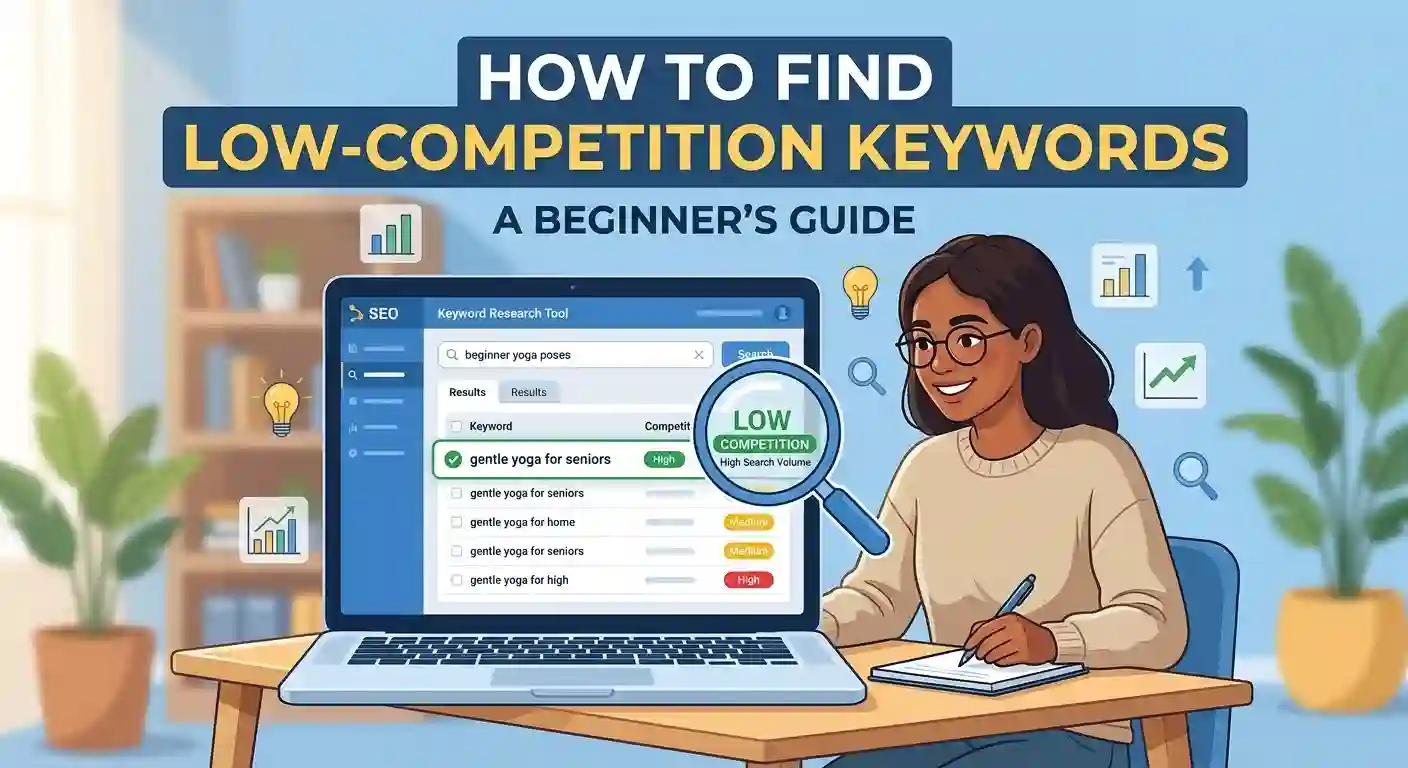
How To Find Low-Competition Keywords: Beginner’s Guide
Getting your website to appear on Google can be challenging, especially when you are competing with established websites that already have strong authority and thousands of backlinks. However, you do not always need to target highly competitive keywords to attract organic traffic. A smarter approach is to discover search terms that match your content, have genuine search demand, and offer realistic ranking opportunities.
Learning how to find low-competition keywords can help beginners, bloggers, and small-business owners build a stronger SEO strategy without spending a large amount of money on expensive tools. By understanding search intent, analyzing keyword difficulty, and exploring long-tail phrases, you can identify valuable opportunities that larger websites may overlook. In this guide, you will learn practical methods and free tools to make keyword research easier and more effective.
What Are Low-Competition Keywords?
Low-competition keywords are search terms that have relatively fewer or weaker competing pages in search engine results. They can offer better ranking opportunities, particularly for newer websites that have not yet developed strong domain authority.
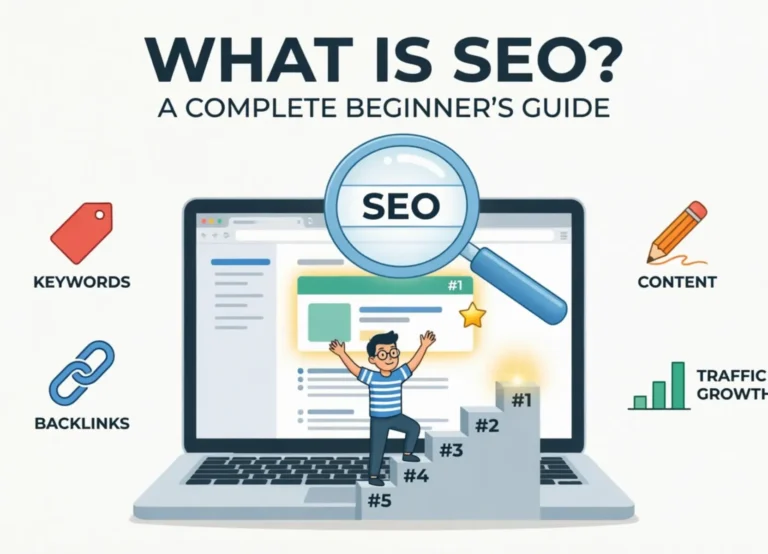
For example, targeting a broad keyword such as “SEO” can be difficult because thousands of established websites publish content about it. Instead, you could target a more specific phrase such as “how to improve SEO for a new WordPress website.”
The second phrase clearly explains what the searcher wants to learn. It also gives you an opportunity to create focused content that directly answers the question.
However, low competition does not automatically mean easy rankings. You should also consider search intent, content quality, website relevance, and the strength of pages already appearing in Google.
Why Should Beginners Target Low-Competition Keywords?
Choosing realistic keywords is an important part of building a sustainable SEO strategy. Instead of competing immediately for broad search terms, beginners can focus on specific topics that match their audience’s needs.
Here are some benefits:
- Better ranking opportunities: Specific keywords may have weaker competing pages, making them more achievable for smaller websites.
- Relevant organic traffic: Long-tail searches often reveal exactly what people want to learn, compare, or solve.
- Improved content planning: Keyword research helps you discover questions and topics that deserve individual articles.
- Stronger topical authority: Publishing useful content around related subjects helps establish your website’s expertise in a particular niche.
- Potential conversions: Visitors searching for specific solutions may be closer to contacting a service provider or choosing a product.
For example, someone searching for “WordPress SEO services for small businesses” may have a more specific requirement than someone searching for “SEO.”
How to Find Low-Competition Keywords: 7 Practical Steps
Finding suitable keywords does not require advanced technical knowledge. You can start with free research tools and a clear understanding of your target audience.
1. Start With Your Main Topic
Before opening any keyword research tool, identify the main subject of your article.
Think about your audience, their problems, and the information they need. Your starting topic should be closely related to your website’s niche.
For example, if you publish content about SEO, your starting topics could include:
- Keyword research
- Website optimization
- Technical SEO
- On-page SEO
- Content marketing
- Organic traffic growth
Choose one topic and explore different search phrases around it. This approach helps you find relevant opportunities instead of collecting unrelated keywords simply because they have search volume.
2. Use Google Search Suggestions
Google itself is a useful starting point for keyword research. When people enter a query, Google provides autocomplete suggestions based on various factors, including common searches.
Follow these steps:
1. Open Google Search.
2. Enter your main topic, such as “low competition keywords.”
3. Review the autocomplete suggestions.
4. Write down relevant phrases.
5. Search for your topic and examine the People Also Ask section.
6. Check the related searches displayed near the bottom of the results page.
For example, searching for “how to find keywords” may reveal related questions about free keyword research tools, keyword difficulty, and long-tail keywords.
These suggestions can help you understand what users are interested in and identify additional topics for your content strategy.
Remember that suggestions are keyword ideas, not verified search-volume figures.
3. Find Long-Tail Keywords
Long-tail keywords are specific search phrases that usually contain several words. They help you target a narrower subject instead of competing for a broad term.
For example:
- Broad keyword: Keyword research
- More specific keyword: Low competition keyword research
- Long-tail keyword: How to find low-competition keywords for a new website
Long-tail keyword research is particularly useful for new websites because it helps you discover specific questions that your content can answer.
Try adding phrases such as:
- How to
- Best ways to
- For beginners
- Without paying
- Step by step
- For small businesses
For example, “how to find low KD keywords for free” is more specific than simply targeting “keyword research.”
Do not assume that every longer phrase has low competition. Check its actual search results and keyword metrics before selecting it.
4. Use Free Keyword Research Tools
Keyword research tools help you discover search terms, estimate search demand, and compare competition. You do not need to purchase an expensive subscription when you are starting.
Here are three useful options.
Google Keyword Planner
Google Keyword Planner helps you discover keyword ideas and review average monthly search ranges and advertising competition.
You can enter a starting phrase, explore related suggestions, and identify terms that match your website’s topic.
It is primarily an advertising research tool, so its competition metric refers to Google Ads competition, not organic SEO difficulty.
Keyword Surfer
Keyword Surfer is a browser extension that provides keyword suggestions and estimated search-volume information while browsing Google.
It can help you discover related phrases without constantly switching between different platforms.
Semrush
Semrush provides keyword research features, including keyword difficulty estimates, search intent, related keywords, and SERP analysis.
You can use it to compare different opportunities and understand which websites are competing for your selected phrases.
The free features and available limits may vary, so check the current plan before relying on a particular feature.
5. Analyze Keyword Difficulty (KD)
Keyword difficulty is an important metric when selecting keywords for organic SEO. Many SEO platforms provide a KD score to estimate how challenging it may be to rank for a particular search term.
For a newer website, starting with lower-difficulty keywords can be a practical strategy.
You can use these general screening ranges:
- 0–20: Lower estimated difficulty
- 21–40: Moderate opportunity
- 41–60: More competitive
- 61–100: Highly competitive
These ranges are guidelines, not universal ranking rules. Different SEO tools calculate difficulty differently.
For example, a keyword with a KD score of 15 may still have strong websites ranking in its search results. Meanwhile, a keyword with a higher score could have a few weak pages that you can improve upon.
Always examine the actual Google results before making your final decision.
6. Analyze the First Page of Google
One of the most useful ways to evaluate a keyword is to examine the pages already ranking for it.
Enter your selected keyword into Google and review the first five to ten results.
Pay attention to:
- Website authority: Are established websites dominating the results?
- Content quality: Do existing articles answer the searcher’s question completely?
- Content relevance: Are the results closely related to your keyword?
- Freshness: Are the articles updated and relevant?
- Backlinks: Do competing pages have strong backlink profiles?
- Content gaps: Are important questions missing from the existing articles?
Look for opportunities to provide something more useful. You could include clearer explanations, practical examples, updated information, or step-by-step instructions.
Do not simply copy the structure of competing articles. Your goal should be to provide additional value and solve the reader’s problem more effectively.
7. Select Keywords Based on Search Intent
Search intent describes the reason behind a user’s search query. Understanding it helps you create content that matches what people expect to find.
There are four common types of search intent:
Informational intent: Users want to learn something or find an answer.
Example: How to find low-competition keywords.
Navigational intent: Users want to visit a particular website or platform.
Example: Google Keyword Planner login.
Commercial intent: Users are researching products, tools, or services before making a decision.
Example: Best free keyword research tools.
Transactional intent: Users are ready to take action, such as purchasing a product or hiring a professional.
Example: Hire an SEO expert for keyword research.
Before targeting any keyword, check what type of content Google displays. If most results are tutorials, publishing a product page probably will not satisfy the search intent.
Common Keyword Research Mistakes to Avoid
Even when you find promising keywords, some mistakes can reduce the effectiveness of your SEO strategy.
1. Choosing keywords only because of high search volume
High search volume does not always mean valuable traffic. A keyword with fewer searches may attract more relevant visitors who genuinely need your information or services.
2. Ignoring search intent
If your article does not answer the searcher’s actual question, it may struggle to compete with more relevant results.
3. Keyword stuffing
Repeating your focus keyphrase unnaturally can make your writing difficult to read. Use your primary and secondary keywords naturally throughout the article.
4. Targeting the same keyword with multiple articles
Publishing several articles targeting nearly identical search terms can create overlapping content. Assign one primary keyword to each article and use related phrases naturally within it.
5. Ignoring your competitors
Never depend entirely on a KD score. Review the actual search results to understand what you need to compete with.
6. Forgetting to update existing content
Review your articles regularly. Update outdated information, improve weak sections, and add useful examples when necessary.
How to Turn Your Keyword Research Into an SEO Strategy
Finding keywords is only the beginning. The next step is organizing them into a content plan.
Start by selecting 10–15 relevant keywords for your website. Group related phrases according to their main topics and search intent.
For example, if your main subject is SEO, you could organize your content around keyword research, technical SEO, website optimization, and content strategy.
Assign one primary keyword to each article. Use relevant secondary keywords as supporting phrases rather than creating unnecessary separate posts.
You should also connect related articles through internal links. This makes it easier for visitors to explore your website and helps search engines discover relationships between your content.
Once your articles are published, monitor their performance through Google Search Console. Review impressions, clicks, average positions, and the actual queries bringing visitors to your website.
Use this information to identify opportunities for improvement and plan your next articles.
Conclusion
Learning how to find low-competition keywords is an important step toward building a successful SEO strategy. Instead of competing immediately for broad and highly competitive search terms, focus on relevant long-tail keywords that match your audience’s needs and offer realistic ranking opportunities.
Start with Google suggestions, explore free keyword research tools, analyze keyword difficulty, and examine the first page of search results before selecting your target phrases. Most importantly, create original, helpful content that answers real questions rather than simply repeating keywords.
At Trafxd.com, we believe effective SEO starts with smart research and consistent optimization. If you want to improve your website visibility, attract relevant organic traffic, or build a stronger digital presence, explore our SEO resources and connect with us for professional SEO and WordPress solutions. Let’s turn your website into a stronger platform for long-term digital growth.
Frequently Asked Questions (FAQs)
1. How do I find low-competition keywords for free?
You can use Google Autocomplete, People Also Ask, Google Keyword Planner, and free keyword research tools to discover keyword ideas. Then examine the search results to evaluate competition and content opportunities.
2. What is a good keyword difficulty score for beginners?
A KD score below 30 can be a useful starting point for a new website. However, difficulty scores vary between tools, so always check the actual competing pages before choosing a keyword.
3. Are long-tail keywords easier to rank for?
Long-tail keywords can offer more specific ranking opportunities because they target narrower searches. However, their difficulty depends on the competing pages, search demand, and content relevance.
4. Which free tool is best for keyword research?
Google Keyword Planner is a useful starting point for discovering keyword ideas and estimated search demand. Keyword Surfer can also provide helpful suggestions while browsing Google.
5. How many keywords should I target in one article?
Start with one primary focus keyphrase and several closely related secondary keywords. Include them naturally where they help explain the topic. Avoid forcing keywords into every paragraph.
6. Can a new website rank for competitive keywords?
Yes, but it may take time and considerable effort. A better starting strategy is to publish useful content around relevant, specific keywords, build topical coverage, and strengthen your website’s authority gradually.